
Staff Testimony - Russell's Story
# malverncommunity
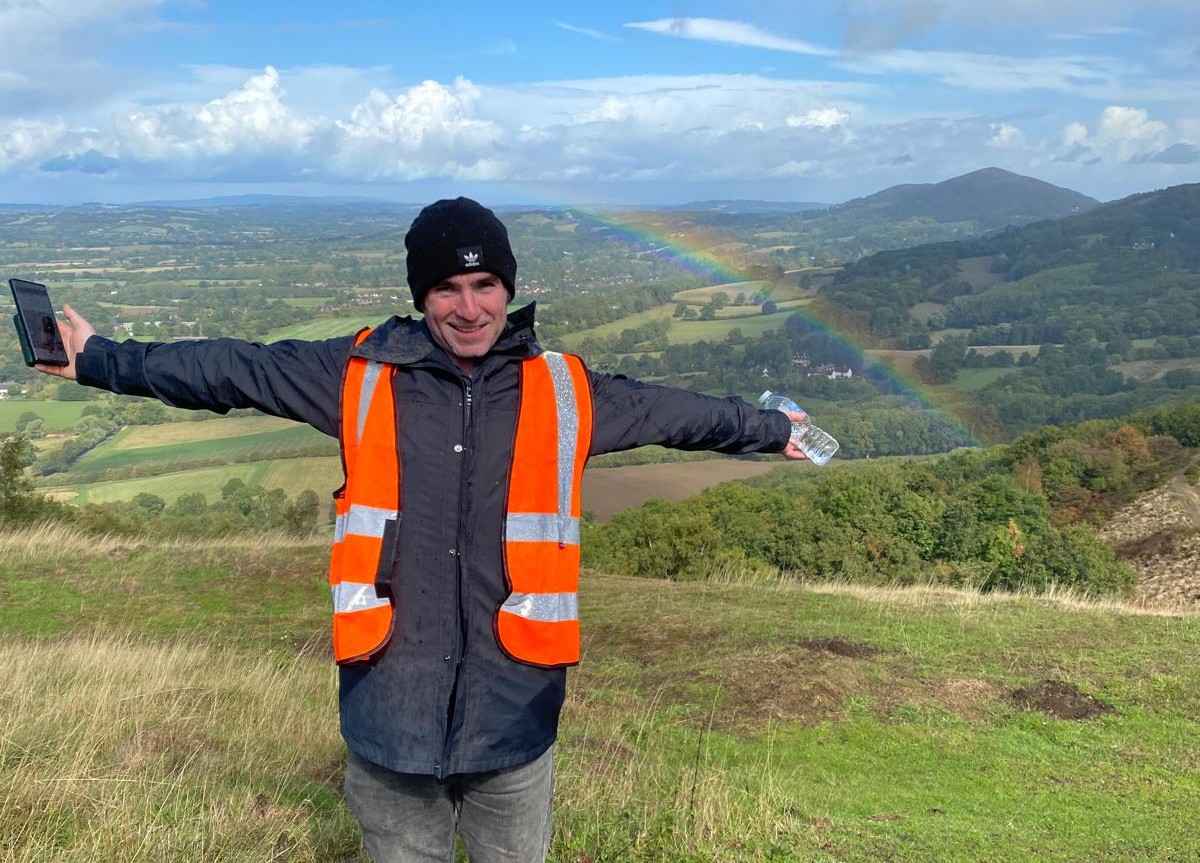
The support that saved him, he now gives back.
Russell speaks openly about how community carried him through recovery, and how he fosters safe spaces that do the same for others.
Russell is a charming guy with a Brummie accent, a mod-style haircut and an obvious love of music. But what you can’t tell at first glance is the struggle with addiction he’s been through, or the work he has put in to find stability and security after nearly 20 years of using drugs. Now, five years since he stepped out of rehab, his recovery journey has given him a newfound sense of purpose. Helping others navigate recovery and relapse whilst reintegrating in society is what gets him out of bed in the morning.
Russell told us, in his own words, what that journey has been like for him, and how he came to be our Project Manager for the Malvern men’s community.
How did you come to work for Hope and Vision?
It's a bit of an entwined story, if I'm honest.
Around five years ago, I was newly sober, a few months clean, and had started attending Sunday services at St Andrews in Malvern. A friend, Colin, called me over one week to introduce me to a man named Tony. He told me about a charity he'd set up, and I was more than a little interested to hear more.
Around that time I'd started a mutual aid group at the church, and I asked Tony if he'd come and share with us. He drove up from Reading a few weeks later, and I remember him going pink in the face telling his story. Getting clean, finding God, the humility in it. We stayed in touch after that.
My own work began in supported housing in Worcester. A couple of years later I was a drug worker with CGL, working the homeless team in central Birmingham, its own chasm of chaos, but a job I thoroughly enjoyed. From there I was asked to apply for an NHS role in a Midlands prison, and I remember feeling so proud, because four years earlier I'd been skin and bones, lying to everyone I loved, barely holding an existence together at all.
Around this time, the operations manager I'd stayed in touch with from my first job in housing told me they were pulling out of the area. The council funding had dried up. I knew exactly who to call, and it wasn't the Ghostbusters. I rang Tony, told him what was happening locally. He said, funny you should mention it, he'd just come out of a meeting with the Hope and Vision trustees, tasked with finding the charity's next area to set up.
And the rest, as they say, is history.
What was the hardest part of coming out the other side of treatment/rehab for you personally?
Facing life, without a doubt.
The day I went into rehab, I'd just taken my last drug that morning. I got in the shower and cried, curled up in a ball in the bath. I was terrified. At the time, it was the scariest day of my life.
Rehab itself wasn't so bad, I was only there 28 days, and I still have friends from that time. I was even made Peer of the Week and got a certificate which still cheers me up. But that was the problem. I was out of society entirely, three meals a day, classes, groups, everything held for me. Then the actual scariest day of my life arrived, stepping back into the world clean and sober for the first time in my life. I was 37.
I managed to stay clean for a year, then kept relapsing. There was definitely an element of "I'm clean and sober now" ego in there. I'd stayed in mutual aid from the day I left rehab, through every relapse, but I truly believe the real problem was thinking I could control my own life without being told how to do it, without listening to anyone else. I couldn't let go of everything I thought I knew. Religion, science, politics, people. Until I could do that, I didn't have a clean, honest slate to actually start from.
What's helped you stay in recovery for the long haul?
For me, it's the work I get to do with other people, and the journey of finding out who I am as a person and what I actually want to be.
And trying to avoid the cliches in the rooms, having support and people around me in recovery has helped enormously, of course. But beyond mutual aid, I've realised how important it is, personally, to keep growing, whether that's in my home life, my work, therapy or education. Standing still was never really an option for me.
Learning to sit with my feelings is key, though. That's what I'd been running from for so many years, and it's what kept me in addiction in the first place.
What was it like working as a drug worker in a prison setting?
It was great, honestly. The strange part was that after working with the homeless team in Birmingham, a lot of the guys I met inside already knew me, which helped me settle into the setting far faster than I expected.
I ran mutual aid groups in there, and what struck me most was that if they could trust you, hard to do in a prison setting, they'd be genuinely vulnerable with you. The men who came to my groups were there because they wanted to be, because they genuinely wanted a way out of the cycle they were stuck in. In that room, in that moment, they'd have passed a lie detector. But they were in a bubble.
Everything changed the moment they reached the gate on release day. Someone would ask, "so who wants to score?" They only had to get to the end of the driveway and a dealer would be waiting. You could almost guarantee who'd be back within four weeks. That was a hard realisation.
The system is broken. Even the ones who didn't use, and some genuinely didn't, were still set up to fail. Recalled for missing a probation appointment, or having nowhere to live. It was a real shame to watch. I tried to raise these points further up the chain, but it always fell on deaf ears.
Since leaving the prison, I've crossed paths with four men I worked with there, all now clean and sober. They come over to thank me for sticking with them, for not giving up. I always tell them it wasn't me who did the work, it was them.
But there's one I'm particularly proud of. A prolific offender, in and out of the system for years. He seemed to genuinely want to know how I'd got clean, so any time he gave me an excuse to skip something I thought he should attend, I dragged him along anyway.
When he was released, he relapsed on alcohol his first day out. That same night, he came to a meeting, and he hasn't used or drunk since. He's now back in contact with his kids, working as a drug worker with the local substance misuse team, over two years clean and sober, studying psychology at university. I'm proud to call him my friend.
Little wins.
What does Hope and Vision offer that you didn't have, or wish you'd had, in your own journey?
Continuity, really. Somewhere to actually land.
I didn't have anything like Hope and Vision when I came out of rehab. I had mutual aid, and I had people around me, which mattered enormously, and I don't want to undersell that. But there was no structured place to go, no community built specifically to hold you through those first, hardest months. I had to piece that stability together myself.
The truth is, I'd never lived in society as a clean and sober adult. Not once. That was daunting in a way that's hard to explain unless you've lived it.
What Hope and Vision offers is that missing piece. People can stay as long as they need to. There's no timer running, no pressure to have your life sorted by an arbitrary date. That alone gives people the confidence to actually heal, rather than white knuckling their way through recovery because the clock's ticking on where they'll sleep next. Not just a bed. A community, for as long as it takes.
What does a good outcome look like to you, for yourself, and for the people Malvern will support?
It's hard to talk about outcomes when they can be so far in the future. I've already mentioned the clichés you hear in the rooms, but there's one I'll always stick by: One Day at a Time. Sometimes that really is the only thing worth thinking about.
Yes, it would be nice to say they find work, get their own place, get married, become a functioning member of society, and that has happened for people at Hope and Vision. But everyone's journey is different, and what looks like a good outcome for one person won't look the same for another.
Ultimately, the beauty of it is simpler than that. It's giving someone the support and the space to find out who they were meant to be all along. What they choose to do with that afterwards is theirs to decide. And it’s a choice they didn't even know they had before.